How to evaluate AI customer service agents
Are all AI customer service agents the same? How can you differentiate between truly intelligent AI and basic automation wearing an AI mask? We break it down.
It's easy to differentiate between a chatbot and an AI customer service agent: where one needs scripted answers to pre-defined questions, the other reasons and resolves autonomously.
But are all AI agents created equal?
Aside from platform features and capabilities, how do you evaluate the "brains" of the AI agent itself? How can you test it during evaluation cycles to make sure it can hold intuitive, smooth conversations with your customers?
What are the success criteria for AI customer service agents?
To find the most helpful and natural-sounding AI agent, there are 8 criteria you should be looking out for and testing:
- Multiple intents
- Consistent
- Contextual
- Conversational
- Unified and comprehensive
- Relevant
- Semantic understanding
- Answer vs search engine
We'll dive into each one and show you how to test AI customer service agents during evaluation cycles.
“From a customer experience perspective, it truly feels like Glam Bot can listen to the customer and respond accordingly, which is a huge improvement in terms of quality.”



1. Does the AI agent understand multiple intents?
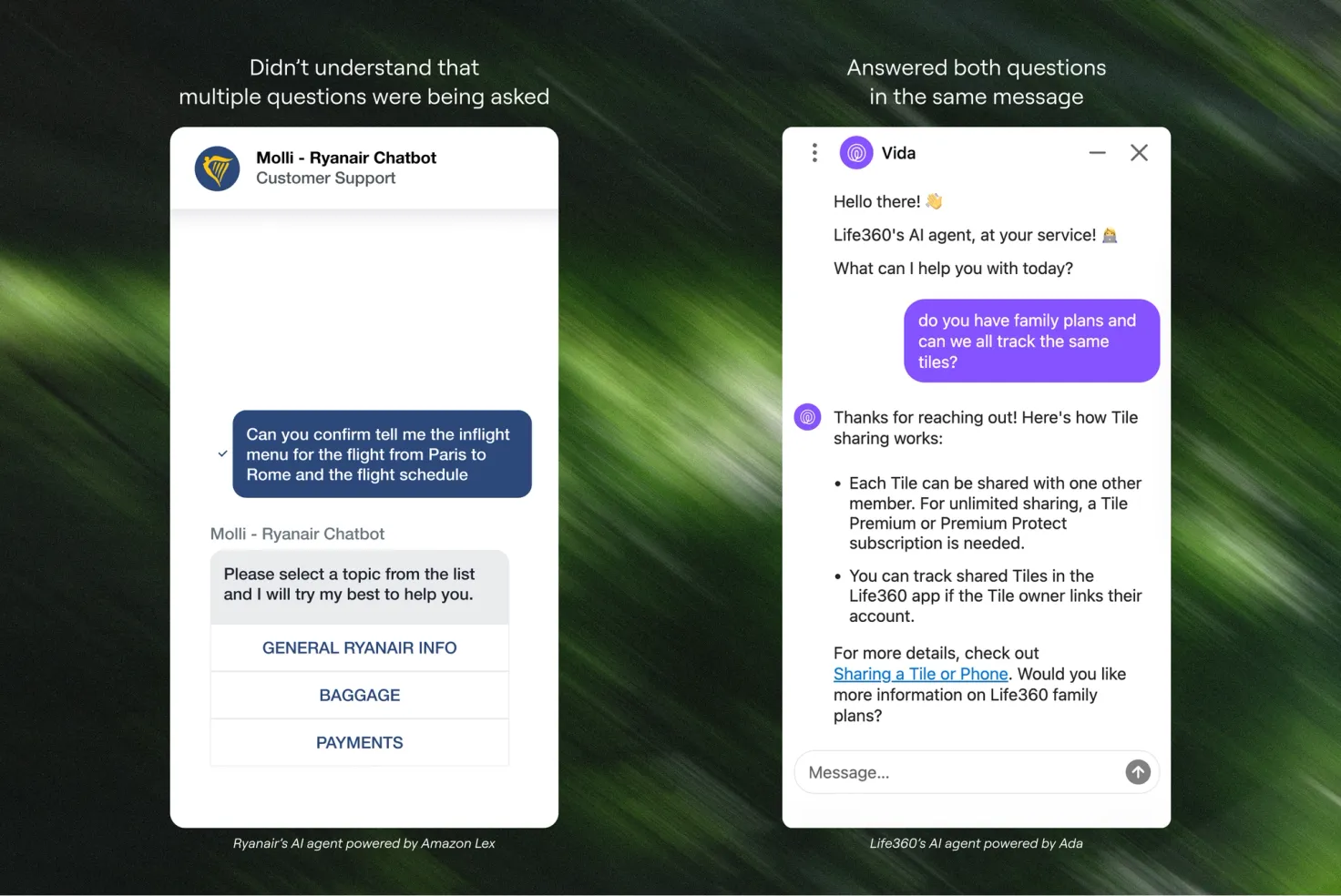
Customers often ask more than one question at the same time, for example, "Do you ship to Alaska? How long would it take?"
Even though this is technically one inquiry (or ticket), it contains multiple intents:
- Do you ship to Alaska?
- How long would shipping to Alaska take?
The AI agent should be able to understand this and craft an answer that addresses both intents.
Without understanding multiple intents, the AI agent will have to ask the customer to clarify or simplify their question. The result is unnecessary friction leading to frustration.
Ask about two different topics in the same question. The AI agent should be able to detect that and answer both.
2. Does the AI agent provide a consistent resolution to the same issue?
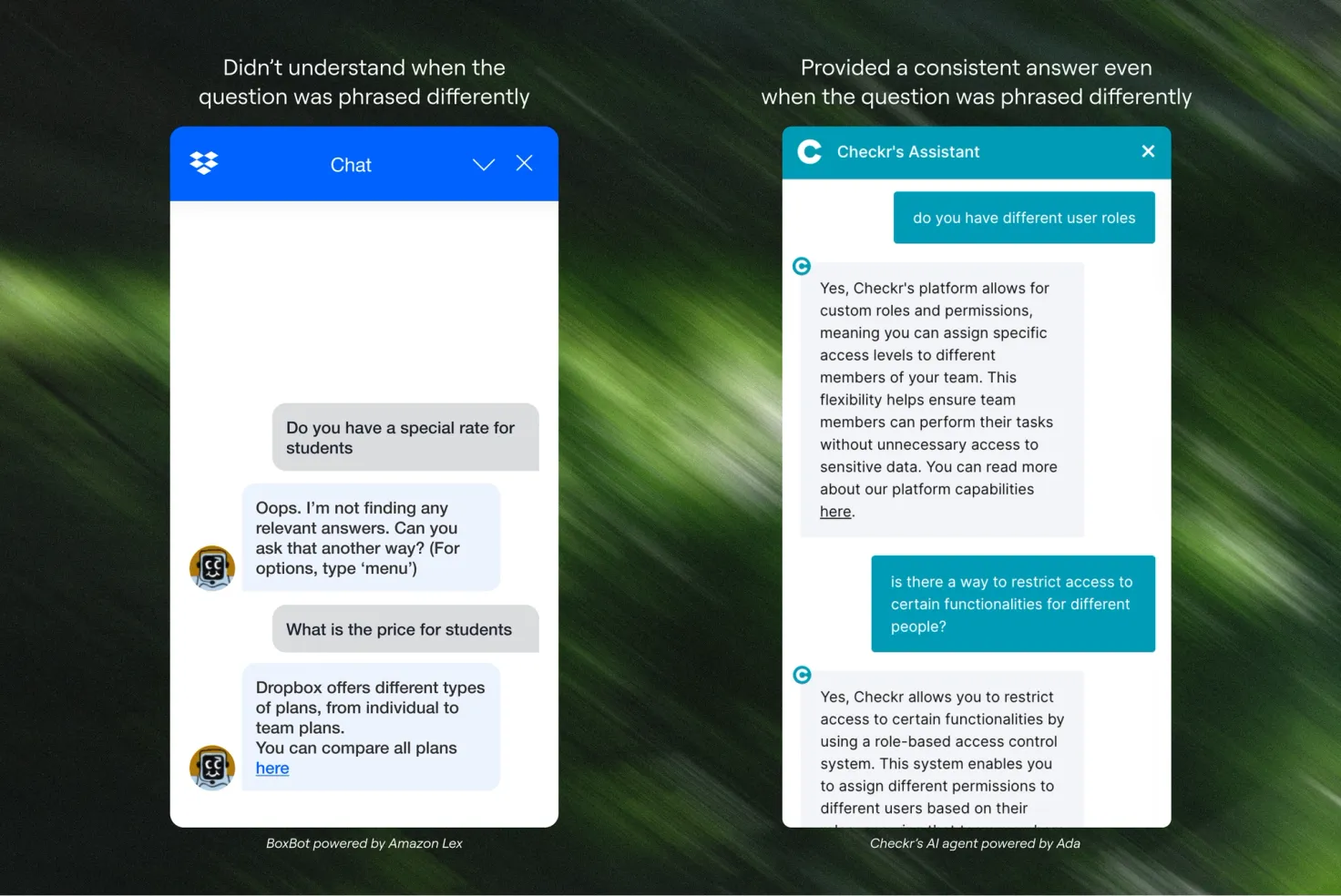
It's natural for customers to phrase things in different ways, for example, "what's the status of my order?" vs "when will my package arrive?"
The AI agent should be able to understand the intent and provide a consistent resolution to the same issue, even if it's expressed in different ways.
The advantage of AI agents over scripted chatbots is precisely that you don't need to get caught up in precise wording, or spend time on tedious training. A consistent AI agent increases your speed to value and provides a smoother customer experience.
Ask the same question in two different ways. The AI agent should give you a consistent answer. The exact wording of the AI agent's answer doesn’t need to be an exact match as long as the information is correct.
3. Does the AI agent understand the context of the conversation?
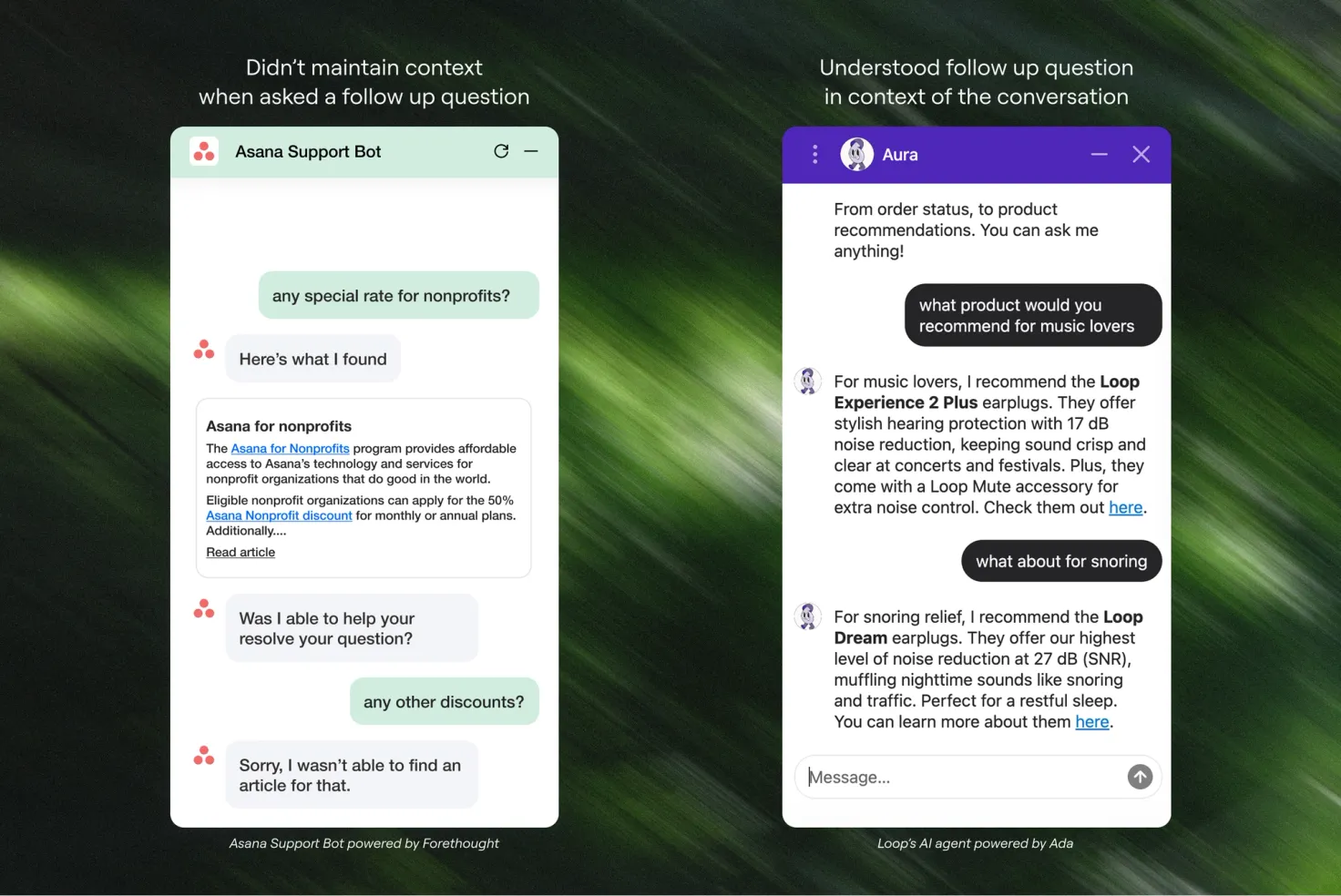
The AI agent understands the context of the conversation and correctly answers follow up questions.
Contextual understanding is important for conversations to sound natural and organic. The customer doesn't need to repeat themselves, which improves the service experience and reduces the number of conversations that are contained but not resolved (i.e. the customer gets frustrated and leaves without escalating to a human agent).
Ask a question and let the AI agent respond, then ask follow up questions. The AI agent should be able to respond to them in context of the whole conversation.
4. Does the AI agent know how to converse?
The AI agent has general conversational skills and can address questions unrelated to any specific topic in a similar way to a human agent.
Some customers might reflexively make small talk, or ask questions that don't have a specific help article. Conversational skills are essential to making the AI agent perform at the same level as a human agent would.
Ask simple questions that are related to the product or service but would not have a specific answer prepared for them. The AI agent should be able to respond conversationally.
5. Can the AI agent provide the same experience across various product lines or service channels?
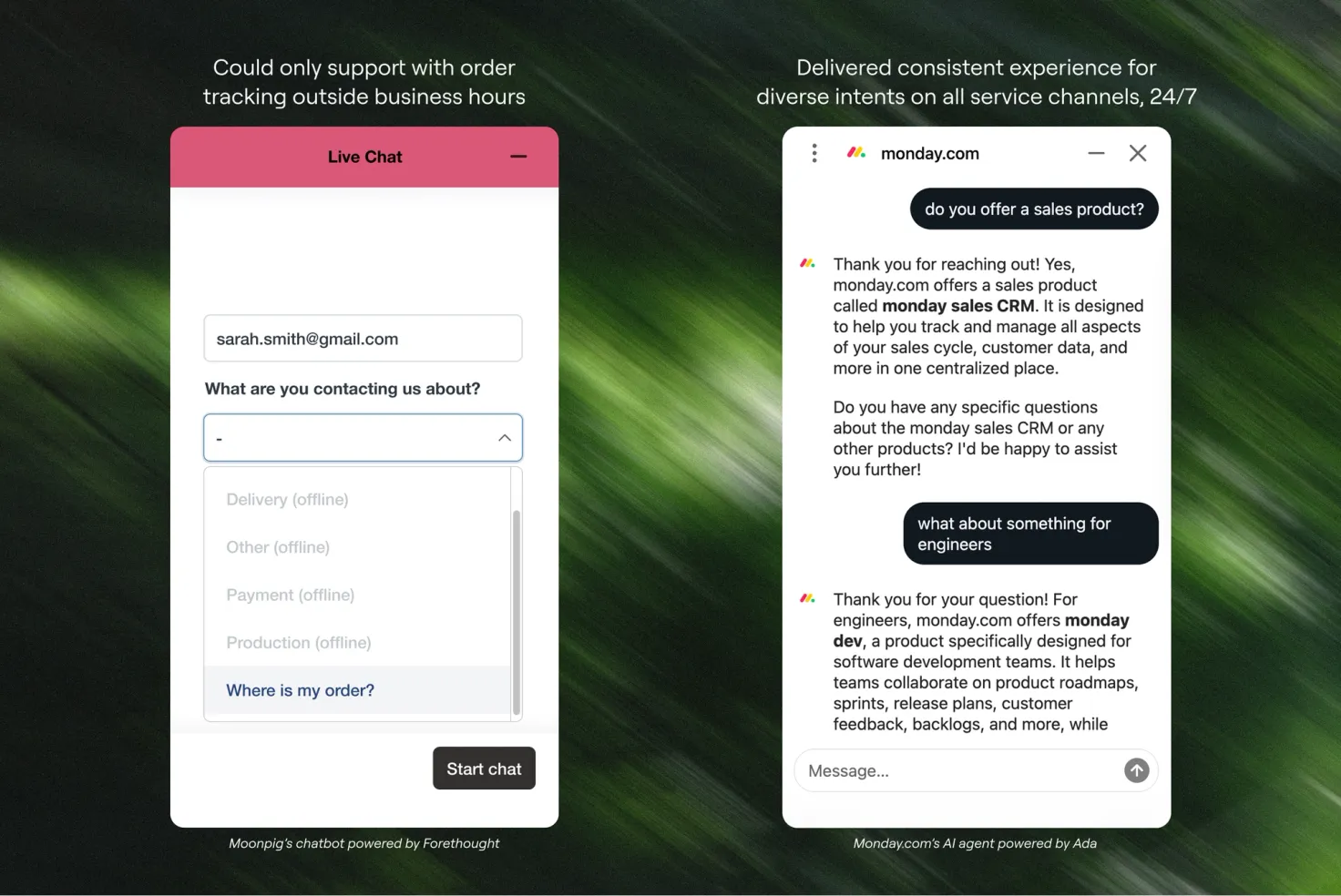
The AI agent can answer questions, perform actions, and provide the same conversational experience regardless of which product line your customers are asking about, which channel they reach out on, or what time of day it is.
With an AI agent, you don’t have to build or train rigid flows. It learns from your knowledge and scales across every channel without extra effort or cost.
Ask about different product lines or try the chat outside of business hours. The AI agent should provide the same conversational experience and still be able to perform the same actions.
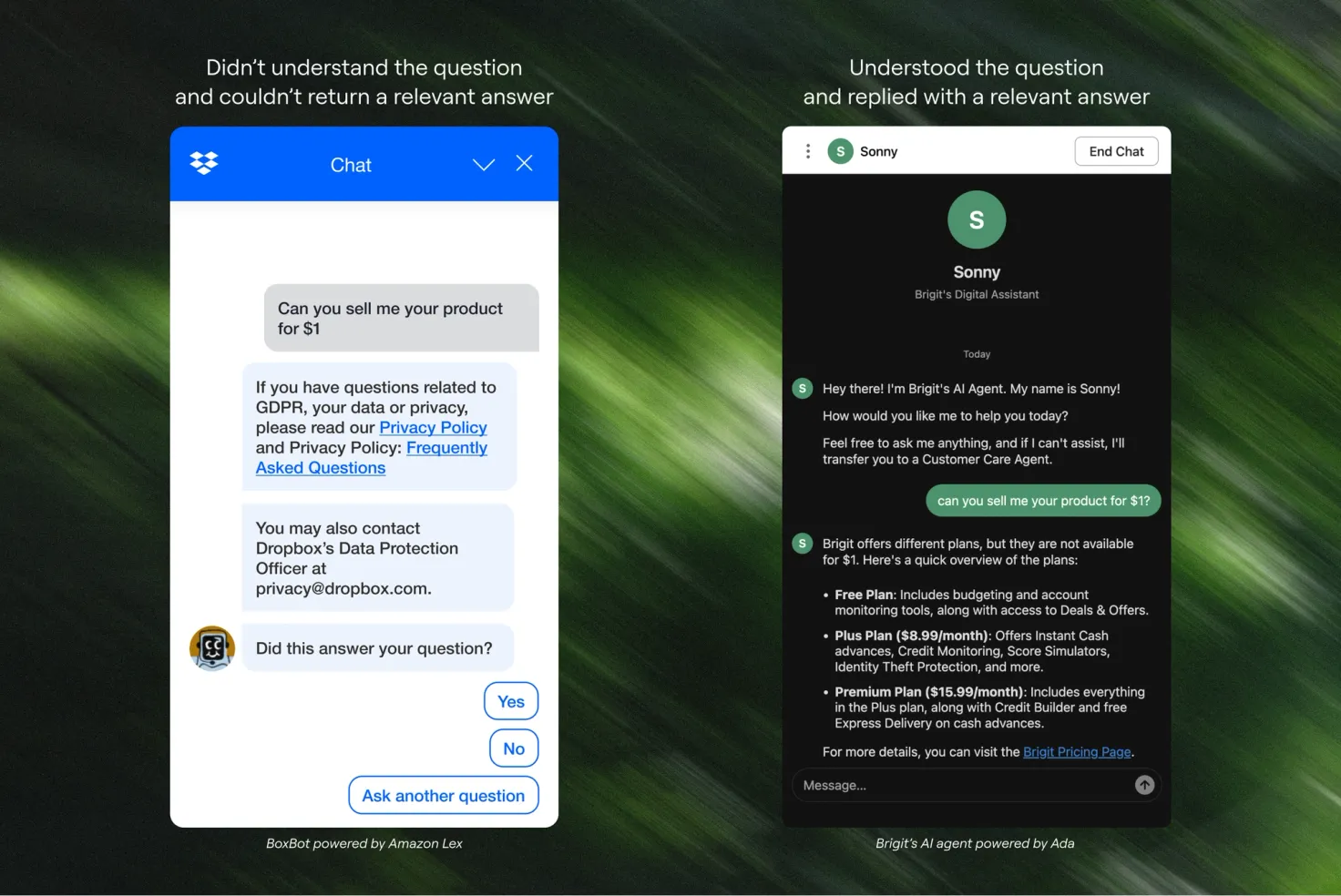
6. Does the AI agent return relevant answers?
Returning relevant answers means that the AI agent effectively understands the customer’s inquiry, and provides directly-related information or assistance.
Without this skill, the AI agent might be only generating truthful facts that are unrelated to the customer’s inquiry, and doesn't really resolve anything.
Ask an unusual question. The AI agent should still be able to give you a relevant response.
7. Does the AI agent actually understand the customer's inquiry?
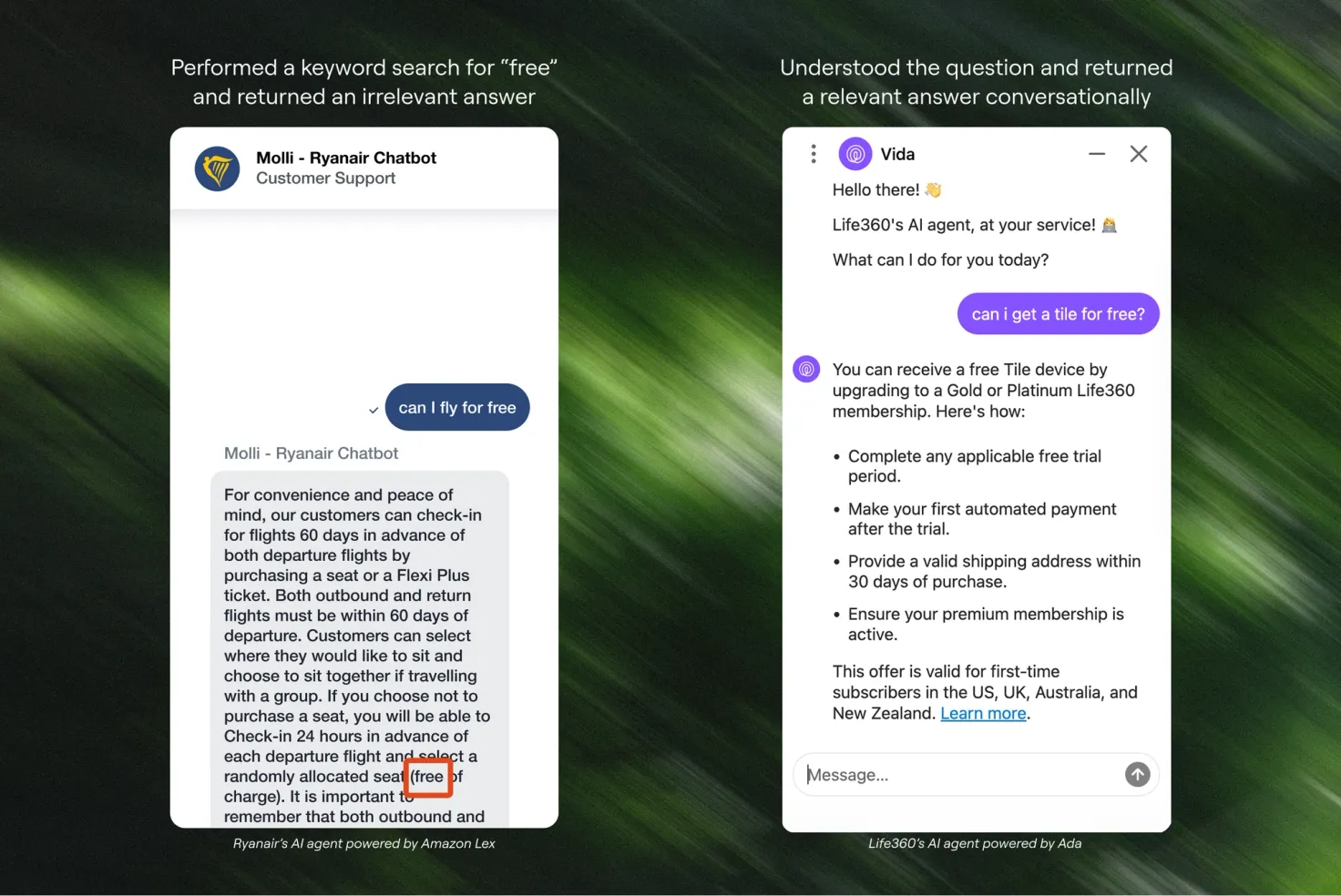
Before the AI agent can resolve anything, it must first truly understand what the customer is asking about. Only then can it perform reasoning and find the best resolution.
Without semantic understanding, the AI agent would be a glorified keyword search engine that doesn’t resolve anything, and you’d have deployed an expensive search bar.
Ask a question that includes a potentially tricky keyword, such as “can I get a product for free?”. The AI agent’s answer should still be relevant.
8. Does the AI agent actually answer questions or does it just send links to help articles?
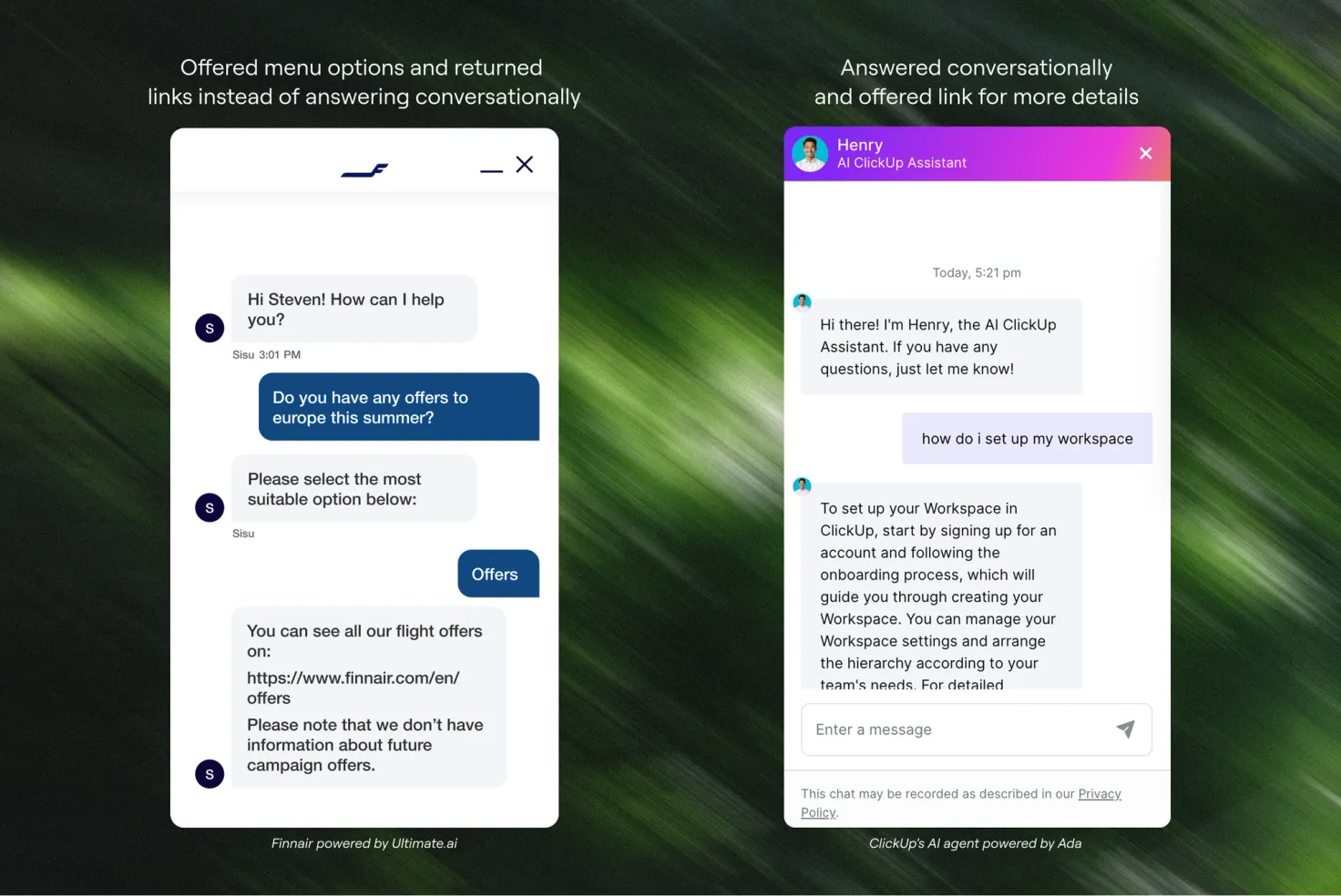
When asked a question, the AI agent provides a specific answer, not just a link to the relevant help article.
What’s the point of chatting with an AI agent if all they’ll do is send you to the help center articles? That’s not what we call a resolution, and it’s a complete waste of the money you’re spending on it.
Ask a question that has a help doc article. The AI agent should provide an actual, conversational answer instead of simply returning a link to that article.
Put it into practice with this template
Now that you know what you're looking for, it's time to go out and find it. Click the "Download companion templates" button to get a one-pager that summarizes this information into actionable tests you can run while evaluating AI customer service agents.
Meet your new AI customer service agent
With Ada, you get a unified ACX platform that empowers you to deliver efficient, high-quality support across all channels and languages, 24/7.
Book a demo