
Your AI agent can now make the call
Most customer service starts with the customer. Something goes wrong, they pick up the phone, and they wait. That’s true even when the business knew first: the flight was canceled an hour ago, the delivery failed this morning, the claim has been stuck on one missing document since Tuesday.
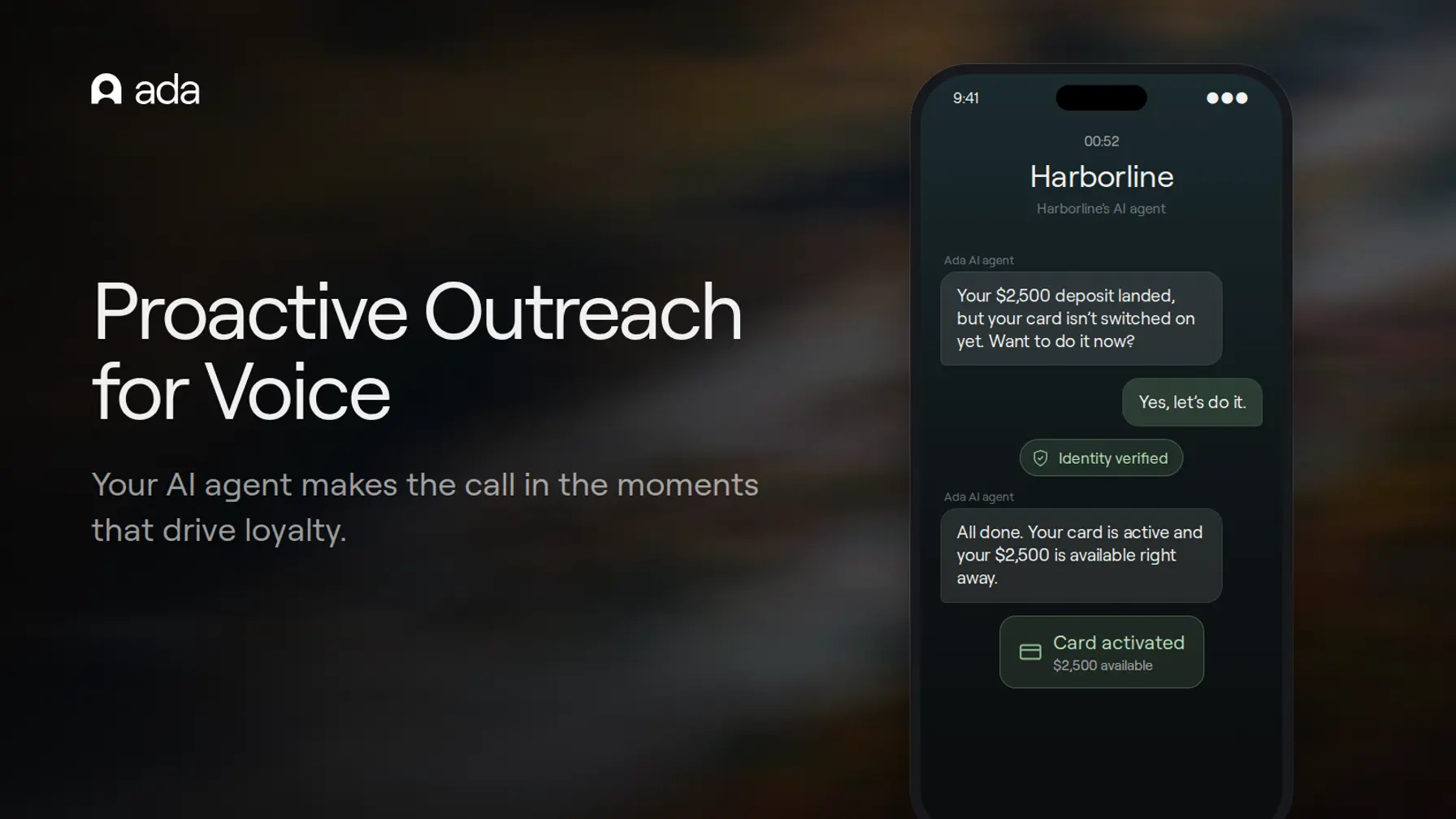
Proactive Outreach changes the direction of the call to allow businesses to drive loyalty in the moments that matter most. It lets an Ada-powered AI agent call a customer when something needs their attention, and resolve the issue on the call, over the phone system the business already runs. Your systems decide who gets a call. When the customer answers, the AI agent already knows why it’s calling and what needs to be accomplished for the customer.
If you run customer service or a contact center, this is about the calls you’ve always waited to receive.
Why has customer service always waited for the customer to call?
A business that wanted to reach customers first had two options: staff a team to make outbound calls, or send a message and hope the customer acted on it. A notification can tell someone their flight is canceled, it can’t rebook them.
The same was true of AI agents, waiting for the phone to ring. Anything time-sensitive on the business’s side, a delayed order, an appointment to confirm, a callback promised to someone stuck in a queue, went to a human team or didn’t happen at all.
How does Proactive Outreach work?
Ada Proactive Outreach already reaches customers through messaging, and now it reaches them by phone. A call starts in one of two ways. Your own systems can ask Ada to place it through Ada’s API, and Ada calls the customer over your outbound SIP trunk. Or your contact center platform places the call itself and hands it to Ada once a person is on the line.
Either way, the call carries its context. Only the details your systems choose to send travel with it, such as the booking reference, the order number, or the reason for the call. When the customer answers, the AI agent runs the Playbook your team set up for that outreach. On calls Ada places, if it detects an answering machine, the AI agent ends the call without leaving a message. On calls from your contact center, your platform screens those out and only hands Ada the calls a person answered.
One AI agent, owning the entire customer lifecycle
Ada-powered AI agents create one unified experience for customers, across every channel and touchpoint. A call Ada places runs through the same AI agent as a call Ada receives, using the same knowledge, Playbooks, and tools. There’s no second agent to configure and nothing to keep in sync. Build once and deploy everywhere, with a consistent, on-brand experience.
So the agent that calls about a canceled flight can also look up the booking, check what’s available, and rebook the traveler, using the tools your team has already connected. Your Playbook decides what the agent says, so you can set it up to confirm who it’s speaking with before it mentions a booking or an account.
What can teams accomplish
Your systems already know when a flight is canceled or a delivery fails. Proactive Outreach turns that signal into a call. Each of the examples below is a Playbook your team builds, using the systems you’ve already connected.
A callback from inside your app. A customer who’s signed in to your app taps “Call me” for help with their account. The AI agent calls back already knowing who asked and what it’s about, so the customer doesn’t have to explain it all again
A failed delivery. The carrier marks a delivery as missed, and the AI agent calls to arrange the next attempt.
An appointment to confirm. Two days before an appointment, the AI agent calls to confirm it, and with your booking system connected, can reschedule it in the same call if the customer can’t make it.
A claim waiting on one document. The AI agent calls the customer to flag that their claim is stalled, inform exactly what’s missing, and guides the customer on how to submit, resolving the issue on the same call.
A canceled flight. The cancellation triggers a call, and the AI agent reads the booking and offers rebooking options before the traveler reaches the airport.
Proactive Outreach in detail
Proactive Outreach already reaches customers through messaging, and now it reaches them by phone. A call can start in one of two ways, and both run on the phone system you already have:
- Your own systems ask Ada to place the call through Ada’s API, and Ada calls the customer over your outbound SIP trunk.
- Your contact center platform places the call itself and hands it to Ada once a person is on the line.
Either way, each request places one call, and it uses the caller ID your trunk or contact center presents, so customers get the call from your existing numbers.
The call also carries its context. Only the details your systems choose to send travel with it, such as the booking reference, the order number, or the reason for the call. When the customer answers, the AI agent runs the Playbook your team set up for that outreach. On calls Ada places, if it detects an answering machine, the AI agent ends the call without leaving a voicemail. On calls from your contact center, your platform screens those out and only hands Ada the calls a person answered.
Once calls are running, the Voice Proactive Outreach report shows how each outreach performs, including its automated resolution rate and CSAT, so your team can see which outreach to improve next. Webhooks report the state of every call placed through the API.
Ready to get started?
Schedule a time to speak with our voice AI experts to explore what Proactive Outreach can do for your customers
Deliver extraordinary customer experiences with AI agents
Meet with our team of experts to explore how agentic customer experience can lift CSAT, scale support, and drive new revenue. Then see what a best-in-class agentic experience looks like tailored to your top use cases.
Speak to an expert